Why Getting More Website Traffic Isn’t Always the Answer

Website traffic is one of the easiest marketing numbers to understand. More people visited the site this month than last month, so the marketing must be working. That sounds reasonable, but traffic alone does not tell you whether the website is helping the business grow.
A company can attract thousands of visitors without receiving qualified calls, appointments, estimate requests, or sales. Another company may receive far fewer visitors but generate more revenue because those visitors have a stronger reason to buy and encounter a website that makes the next step clear.
More website traffic is not always the answer because traffic only creates value when the right people arrive, find what they need, trust the business, and take a meaningful action. Before investing more money into SEO, paid advertising, content, or social media, a business should determine what is preventing its current visitors from becoming customers.
Website Traffic Is a Marketing Metric, Not a Business Outcome
Traffic tells you how many people reached the website. It does not tell you whether those people were good prospects, whether they understood the offer, or whether they became customers.
A traffic increase may come from a popular blog post that attracts people from outside the company’s service area. A social media post may generate many curious visitors who have no intention of buying. A paid advertising campaign may attract clicks from people searching for something the business does not provide.

Those visits are not necessarily worthless. Informational content can build awareness and introduce new people to a brand. The problem appears when the business treats every visit as if it has the same value.
The goal is not simply to bring more people through the digital front door. It is to attract the people most likely to need the company’s products or services and help them move toward a decision.
Captevrix’s digital marketing and business strategy services are built around this distinction. Visibility matters, but it must be connected to a website, message, lead process, and customer experience that can turn attention into action.
The Wrong Traffic Can Make the Numbers Look Better Without Helping the Business
Not all website visitors are equally valuable. Imagine that a residential roofing company publishes an article about how roofs are constructed. The article begins attracting architecture students, contractors, and do-it-yourself readers from across the country. Website traffic increases significantly, but the company does not receive more local roof inspection requests.
The content may be useful and well written, but it is not reaching the audience most likely to hire the company. Fewer visitors searching for “roof leak repair near me” may generate more business than thousands of readers looking for general construction information. The difference is search intent.
Search intent describes what a person is trying to accomplish. Someone may be looking for information, comparing options, trying to find a local provider, or preparing to make a purchase. A successful marketing strategy considers the intent behind the visit instead of focusing only on the number of visitors.
Google explains that SEO helps search engines understand a page and helps users decide whether it's relevant to what they need. That means attracting more organic traffic should begin with creating pages that match real customer questions and decisions, not simply pursuing any keyword that appears capable of generating visits.
A Traffic Problem May Actually Be a Messaging Problem
A business may be reaching the right audience but still failing to generate leads because the website does not explain the offer clearly. Visitors should be able to determine quickly what the company does, who it serves, and what makes it a reasonable choice. When that information is buried under vague language, long introductions, industry jargon, or an overloaded design, potential customers may leave before they find the answer.
This is especially common when a company describes itself from an internal perspective. The website may focus on its history, process, technology, or company culture without clearly addressing the problem the customer is trying to solve.
A visitor is usually asking practical questions:
Do you provide the service I need?
Do you serve my area?
Can you solve my specific problem?
What should I expect?
Why should I trust you?
What do I do next?
When those answers are difficult to find, sending more people to the website only increases the number of people encountering the same confusion. Before investing in more traffic, review whether the website’s message matches the reason people are visiting.
The Landing Page May Not Match the Search or Advertisement
A person clicks because something in a search result, advertisement, email, or social media post appears relevant. The page they reach needs to continue that same conversation.
If an advertisement promotes a specific service but sends visitors to a general homepage, people may have to search for the information they were promised. If a search result answers a pricing question but the page avoids discussing cost entirely, the visitor may return to the search results and choose another source. This gap between the original message and the destination page creates friction.
A strong landing page should match the visitor’s intent. It should clearly explain the relevant service or offer, address common concerns, and provide a next step that makes sense for that stage of the decision.
The same principle applies to SEO. A page should not rank for a topic that it only mentions briefly. The content should provide the information the searcher reasonably expects to find.
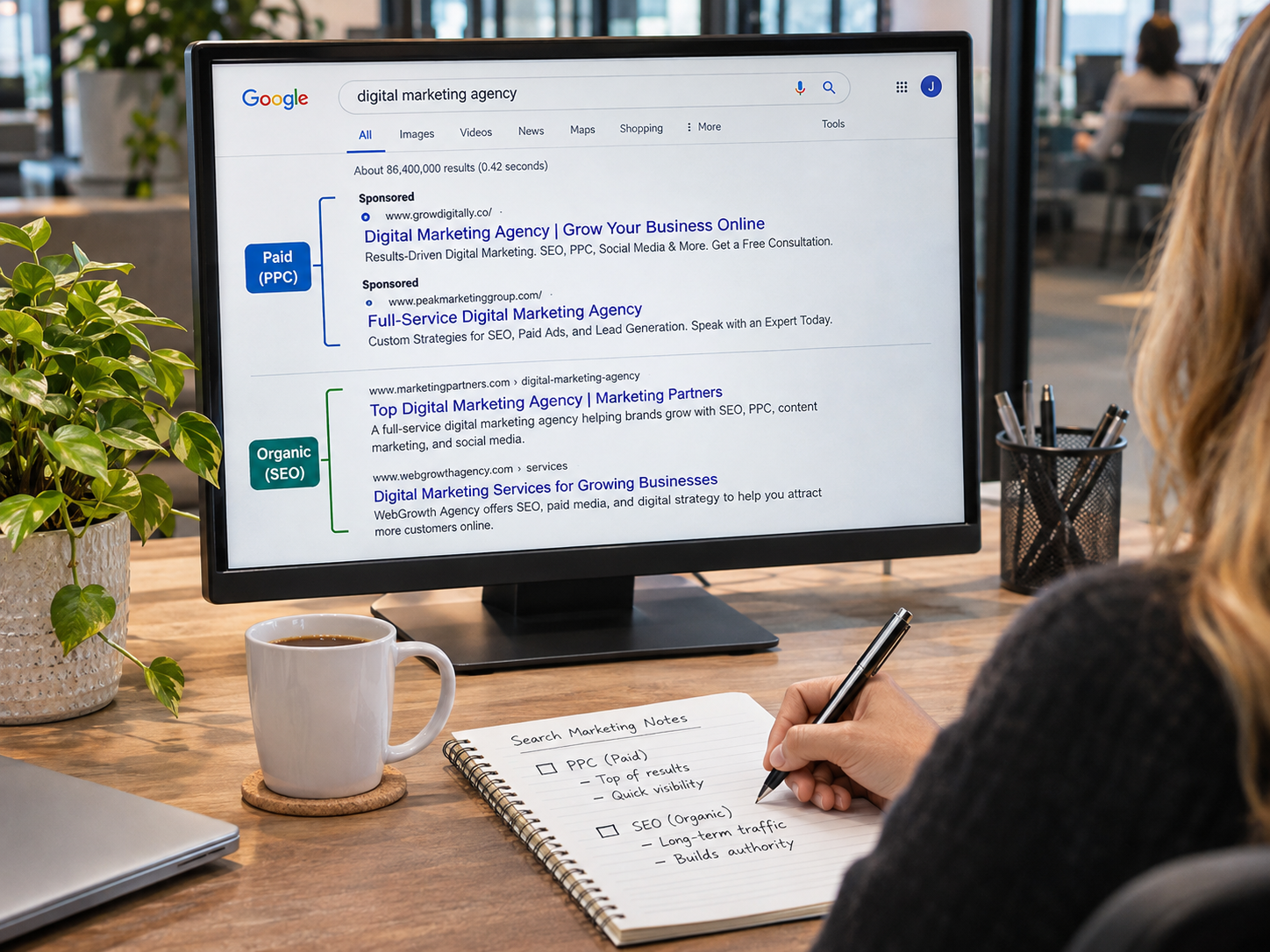
The recent Captevrix article about SEO versus PPC explains that both channels depend on what happens after the visitor reaches the site. More clicks cannot make up for a weak page, unclear offer, or broken contact process.
The Website May Be Creating Too Much Friction
Sometimes the problem is not the audience or the message. The website simply makes it too difficult to take action. A form may ask for more information than the company needs. A booking tool may be confusing on a phone. A contact button may be difficult to find. Pages may load slowly, or important information may be hidden behind several menu selections.
Small points of friction can have a large effect when they appear at an important moment. Consider a potential customer who has decided to request an estimate. The form asks for 15 pieces of information, requires creating an account, and doesn't explain what happens after submission. That visitor may decide to call later, compare another provider, or abandon the process entirely.
The business may interpret the lack of inquiries as a traffic problem and spend more money attracting visitors. In reality, the website is losing people who were already interested.
Review the conversion path from the customer’s point of view. Complete the form on a phone. Test the booking system. Call the phone number. Check whether confirmation messages arrive. Look for unnecessary steps or unclear instructions. More traffic should not be the first solution when the current path is difficult to complete.
Visitors May Not See Enough Reason to Trust the Business
People rarely make decisions based on an offer alone. They also evaluate whether the company appears credible, experienced, and capable of delivering what it promises.
A website may need stronger proof, such as:
Specific service information
Customer reviews
Relevant case studies
Before-and-after examples
Professional credentials
Clear contact information
Real team or workplace photography
Answers to common questions
Transparent explanations of the process
The type of proof should fit the buying decision. A homeowner choosing a repair company may want reviews, service-area information, warranties, and examples of completed work. A business considering custom software may need case studies, a clear development process, ownership information, and a detailed conversation before receiving an estimate.
Trust becomes even more important when the service is expensive, unfamiliar, or difficult to evaluate before purchase. If visitors arrive but don't see enough evidence to feel confident, increasing traffic may only increase the number of undecided people who leave the site.
The Call to Action May Be Too Vague or Too Demanding
Every important page should help the visitor understand the next reasonable step. Calls to action such as “Submit,” “Learn More,” or “Get Started” may not explain what will happen. A more specific direction can reduce uncertainty. Depending on the business, that might be requesting an inspection, scheduling a consultation, checking availability, asking for an estimate, or viewing service options.
The requested action also needs to match the visitor’s readiness. Someone reading an introductory article may not be prepared to schedule a sales meeting. That person may be more comfortable reading a related guide, viewing a case study, or signing up for useful information. A visitor on a detailed service page may be ready for a direct conversation.
Not every page needs the same call to action. The next step should fit the purpose of the page and the stage of the customer’s decision.
This is one reason a coordinated digital marketing strategy should include more than attracting visitors. Content, landing pages, website design, lead tracking, and follow-up should work together.
The Business May Not Be Tracking the Actions That Matter
A business cannot improve what it does not measure accurately. Page views and sessions provide useful context, but they should be reviewed alongside actions that matter to the company. Depending on the business, those actions may include:
Phone calls
Contact form submissions
Appointment requests
Online purchases
Quote requests
Downloads
Email sign-ups
Demo requests
Completed applications
Google Analytics allows businesses to identify important website actions as key events. Advertising conversions can then be used to evaluate campaign performance and help connect marketing activity with business results.
The exact setup depends on the business and its website. The important point is that success should be defined before the campaign begins.
If the goal is to generate consultations, traffic alone should not be the primary measurement. The business should know which channels and pages are producing consultation requests and whether those requests are becoming qualified opportunities.
Google also recommends using Search Console and Google Analytics together to better understand how people discover a website and what they do after they arrive. This can help connect organic search visibility with actions such as lead form submissions, sign-ups, and purchases.
More Leads Are Not Helpful When They Are the Wrong Leads
A website can generate more inquiries without improving the business.
The marketing may attract people outside the service area, customers looking for a lower price point, requests for services the company does not provide, or buyers who are not ready to make a decision.
This creates work for the sales team without creating a realistic path to revenue.
Lead quality should be evaluated alongside lead quantity. A business should review which inquiries became real opportunities, which became customers, and which repeatedly failed to fit.
That information can improve keyword targeting, website messaging, advertising filters, form questions, and content planning. It can also reveal that the business needs to define its ideal customer more clearly.
A smaller number of strong leads may be far more valuable than a large number of inquiries that employees cannot close.
The Problem May Begin After the Lead Arrives
Marketing can do its job and still appear unsuccessful when the follow-up process is weak.
A person may submit a form and wait several days for a response. A phone call may go unanswered without a clear callback process. Leads may be sent to a shared inbox that no one consistently monitors. Employees may not know who is responsible for the next step.
In these situations, the website is generating opportunities, but the business is not converting them.
Before spending more money on traffic, review what happens after each lead arrives. Determine how quickly someone responds, how the lead is assigned, what information employees receive, and how follow-up is tracked.
The solution may involve better training, clearer responsibilities, CRM configuration, automated reminders, lead routing, or a connection between the website and the company’s existing systems.
This is where digital marketing, software, and business operations begin to overlap. More visitors cannot solve a follow-up problem.
When Is More Website Traffic the Right Answer?
More traffic becomes valuable when the foundation is working. The business has a clear offer. The website matches the audience’s intent. Visitors can find the information they need. The next step is easy to complete. Important actions are being tracked, and employees have a reliable process for responding to leads.
At that point, increasing qualified traffic can help the company grow. SEO may expand visibility for services and customer questions that are not currently reaching enough people. PPC may help the business enter a new market or generate faster opportunities. Content may attract buyers earlier in the research process. Email and remarketing may bring interested visitors back when they are ready to act. The key word is qualified.
The goal is not simply to increase the number shown in an analytics report. It is to bring more of the right people into a system that is prepared to serve them.
Measure the Entire Path From Visit to Revenue
A better marketing report connects visibility with business outcomes.
Traffic still matters, but it should be considered alongside:
The source of the visitor
The search or campaign that brought the visitor
The page the visitor entered
Engagement with the page
Completed key events
Qualified leads
Lead-to-customer conversion rate
Cost per qualified lead
Sales and revenue
Customer retention
Not every piece of content will create a direct sale. An educational article may introduce someone to the business and support a later decision. A service page may generate a direct call. A case study may provide the reassurance needed before a consultation.
The purpose of measurement is not to force every page to perform the same job. It is to understand how the different parts of the marketing system contribute to the customer’s decision.
Focus on the Bottleneck Before Increasing the Traffic
When a website is not producing enough business, asking for more traffic is understandable. It may even be part of the answer. It should not be the automatic answer.
First, determine whether the company has a visibility problem, an audience problem, a messaging problem, a website problem, a trust problem, a tracking problem, or a follow-up problem. Each one requires a different solution.
At Captevrix, we begin with the bottleneck. We look at how people find the business, what they experience on the website, which actions they take, and what happens after a lead arrives. The solution may involve SEO, paid advertising, content, website improvements, better tracking, automation, or connected systems.
More traffic is useful when the business is ready to turn that attention into revenue. Until then, improving the path may create more value than adding more people to it.