SEO vs. PPC: Where Should a Business Invest First?

Most businesses know they need to appear when potential customers search for their products or services. The difficult part is deciding how to get there. Should the company invest in search engine optimization and build organic visibility over time, or pay for advertising that can start generating traffic much sooner? The answer depends on what the business needs right now.
A business should usually invest in PPC first when it needs qualified traffic quickly, has a time-sensitive offer, or wants to test demand for a product or service. SEO should usually come first when the goal is to build lasting visibility, reduce long-term dependence on advertising, and become a trusted source of information in the market.
For many businesses, the best strategy is not choosing one and ignoring the other. It is using PPC to generate immediate opportunities while building an SEO foundation that can support growth over time.
What Is SEO?
Search engine optimization, commonly called SEO, is the process of improving a website so search engines can understand its content and connect it with people searching for related information, products, or services.
Google’s SEO Starter Guide describes SEO as helping search engines understand website content while also helping users decide whether a page is relevant enough to visit. SEO can include technical website improvements, service pages, blog content, local search optimization, internal links, page speed, mobile usability, and clearer website structure.
SEO does not involve paying Google every time someone clicks an organic search result. However, that does not make SEO free. A business still has to invest in strategy, content, website improvements, research, measurement, and ongoing optimization.

The biggest advantage of SEO is that the work can continue creating value after a page is published. A useful service page or blog post may attract visitors for months or years, especially when it is reviewed and updated as the business, market, and customer questions change.
The challenge is that SEO takes time. Google explains that some website changes may be reflected within hours, while others can take several months. Businesses should usually allow at least a few weeks before judging whether a change has helped search performance.
What Is PPC?
Pay-per-click advertising, commonly called PPC, allows a business to pay for placement in search results and other digital locations. Google Ads is one of the most familiar examples, although paid campaigns can also run through Microsoft, social media platforms, and other advertising networks.
With search advertising, a business chooses keywords or themes related to its services and creates ads for people searching for those topics. Google uses an auction system to determine which ads are eligible to appear and where they are placed. The bid matters, but so do the relevance of the advertisement, the quality of the landing page, the competition, and the context of the search. With cost-per-click bidding, the advertiser is generally charged when someone clicks the ad. Google’s guide to online advertising explains how the auction, bids, ad quality, and budget work together.
The main advantage of PPC is speed. A well-prepared campaign can begin attracting traffic much faster than an SEO strategy that is still building visibility.
The tradeoff is that the business pays for that access. When the campaign is paused, or the budget runs out, the paid placement usually stops. PPC also requires active management. Search terms, bids, advertisements, audiences, landing pages, and conversion data should be reviewed regularly.
SEO vs. PPC: Which One Produces Results Faster?
PPC usually produces traffic faster than SEO. A business can launch a campaign, enter the advertising auction, and begin appearing for relevant searches without waiting for a page to earn an organic ranking. This can make PPC valuable for a new business, a new service, a seasonal promotion, or a company that needs leads in the near term.
SEO generally takes longer because search engines need time to crawl pages, understand the website, evaluate the content, and observe how the site fits within a larger market. Competitive searches may require a stronger website, better content, more authority, and a longer period of consistent work.
Faster does not automatically mean better. PPC can quickly reveal whether people are interested in an offer, but it can also spend money quickly when targeting, messaging, the website, or conversion tracking is weak.
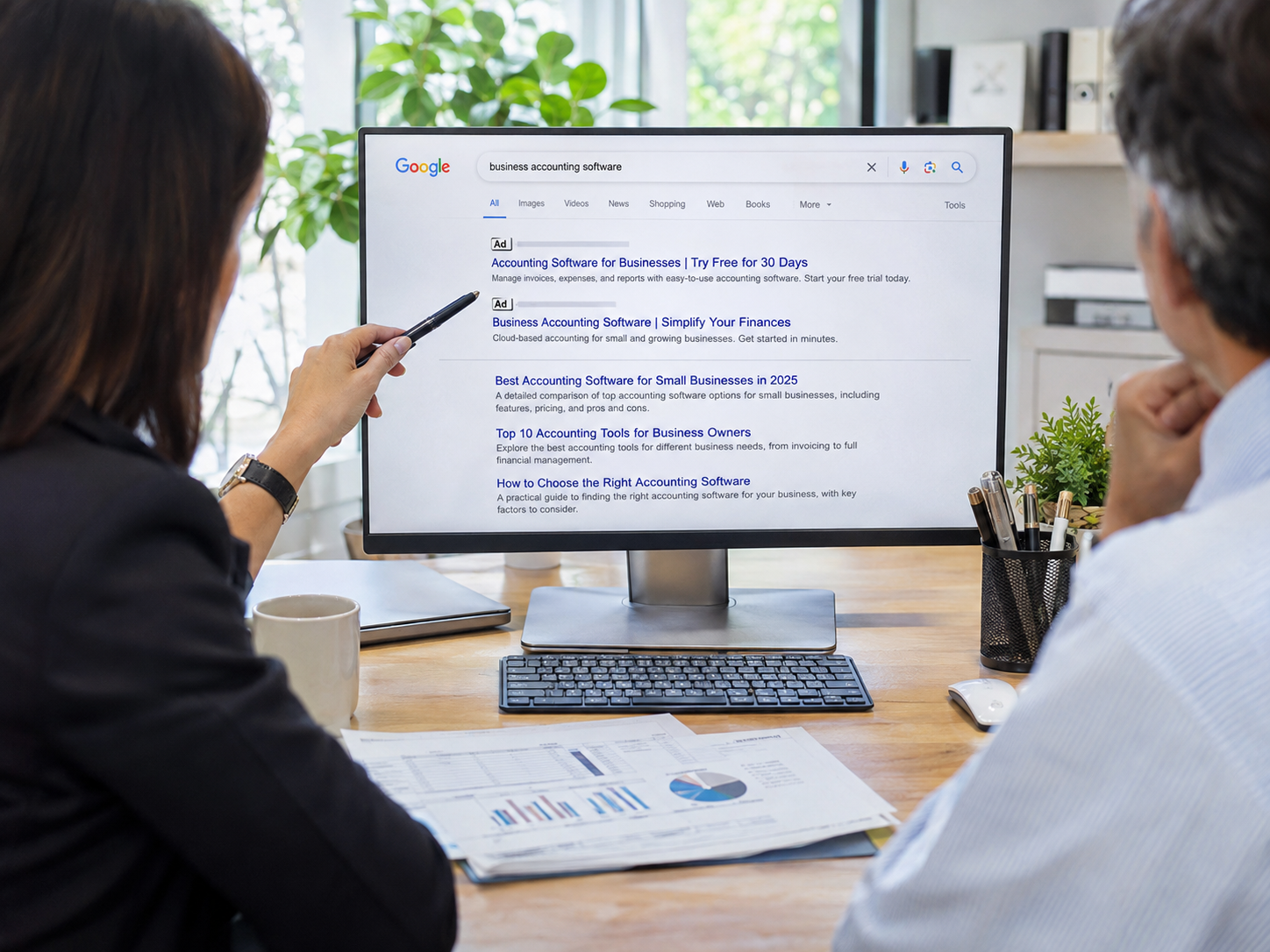
SEO takes more patience, but the value can build over time. A strong organic presence may eventually attract qualified visitors without requiring the business to pay for each individual click.
When Should a Business Invest in SEO First?
SEO should often be the first investment when a business wants to build a durable online presence and isn't relying on immediate campaign results to meet a short-term revenue goal.
This is especially true when customers regularly research a service before deciding. A business may need pages that explain its services, answer common questions, compare options, discuss costs, and help potential customers understand what to expect.
SEO can also be the stronger first choice when a company offers several services or serves multiple customer needs. Each important topic can become part of a connected content structure that helps search engines and potential customers understand the company’s expertise.
Local businesses may benefit from starting with local SEO, service-area information, location pages, reviews, and a well-managed Google Business Profile. Companies serving a broader market may focus more heavily on service pages, industry questions, educational content, comparisons, and decision-stage topics.
A strong SEO foundation can also support answer engine optimization. Clear explanations, well-organized pages, and direct answers can make content easier for traditional search engines and AI-powered platforms to understand. This does not guarantee that an AI system will recommend the business, but it gives those systems clearer information to evaluate.
SEO may deserve priority when:
The business wants sustainable organic visibility.
Customers spend time researching before contacting a provider.
The website lacks strong service pages or useful content.
The company wants to reduce long-term dependence on advertising.
The business can allow time for the strategy to develop.
Local or industry searches are important to future growth.
The broader Captevrix digital marketing services guide explains how SEO, content, paid advertising, and other channels can work together within a larger growth plan.
When Should a Business Invest in PPC First?
PPC may be the better first investment when speed matters. A new business may need leads while its organic search presence is still being developed. An established company may be launching a new service and want to test whether customers respond. A seasonal business may have a limited window to reach people who are actively searching.
Paid search can also be useful when a business wants to target a specific service, location, or high-intent search. Instead of waiting for an organic page to gain visibility, the company can create a focused campaign and direct potential customers to a relevant landing page.
PPC can also provide valuable market information. Search-term and conversion data can show which questions, services, and offers are attracting attention. That information can later guide SEO content, landing pages, and service positioning.
PPC may deserve priority when:
The business needs leads or sales quickly.
A promotion or service has a limited timeline.
The company is entering a new geographic market.
The business wants to test demand before making a larger investment.
The website already has a strong landing page and clear offer.
The company can track calls, forms, purchases, or appointments accurately.
The important phrase is track accurately. Google Ads can measure actions such as website purchases, sign-ups, phone calls, app activity, and certain offline conversions. That data helps advertisers understand which campaigns are producing valuable customer activity rather than simply generating clicks.
Do Not Invest Heavily in Either Channel Until the Website Is Ready
SEO and PPC both depend on what happens after someone reaches the website. A company can rank well and still generate very few leads if the site is confusing. A paid campaign can attract highly qualified visitors and still waste money if the landing page loads slowly, does not explain the offer, or makes contacting the business difficult.
Before placing a large budget into either channel, review the basics. The website should clearly explain what the company does, who it serves, and what the visitor should do next. Contact forms should work. Phone numbers should be easy to find. The site should function well on mobile devices. Important pages should load reliably, and calls or form submissions should be measurable.
This is one reason Captevrix uses a problem-first approach. Our What We Do page connects SEO, local SEO, AEO, digital marketing, paid advertising, conversion-focused websites, and ongoing optimization instead of treating each service as a separate solution.
If the real problem is a weak website or a broken lead process, buying more traffic will not fix it.
How SEO and PPC Work Better Together
SEO and PPC are often presented as competitors for the same budget, but they can strengthen each other.
PPC can provide faster information about search behavior. A business may learn that one service attracts more qualified leads than another, or that customers use different language than the company expected. Those findings can guide future SEO pages and blog topics.
SEO can improve the website that paid visitors reach. Strong service pages, useful content, clear navigation, and a better user experience can support both organic visibility and paid campaign performance.
PPC can also fill temporary gaps in organic search. A business may already rank well for several services but struggle to appear for a newer or more competitive offering. Paid advertising can provide visibility while the organic strategy develops.
Over time, strong SEO may reduce the business's dependence on paid traffic. That does not necessarily mean PPC should be stopped. It may be redirected toward high-value searches, seasonal offers, new markets, remarketing, or services where paid placement continues to produce a profitable return.
What Should a Business Do With a Limited Marketing Budget?
A limited budget makes the order of investment more important. The first priority should be ensuring the website can convert visitors and that key actions can be tracked. Without that foundation, neither SEO nor PPC can be measured properly.
After that, the decision depends on urgency. A business that needs opportunities immediately may begin with a focused PPC campaign rather than spreading a small budget across too many keywords, services, and locations. At the same time, it can improve the most important service pages so the company isn't permanently dependent on advertising.
A business that has steady referrals or enough near-term work may choose to invest more heavily in SEO first. That can include fixing technical problems, improving core service pages, strengthening local visibility, and creating content around real customer questions.
The goal should not be to divide the budget evenly simply because both channels are valuable. The budget should reflect the business’s immediate needs, long-term goals, sales cycle, profit margins, competition, and ability to handle additional leads.
How Should SEO and PPC Results Be Measured?
SEO should be measured by more than rankings. Useful indicators include organic impressions, clicks, qualified traffic, calls, form submissions, bookings, sales, and the search queries bringing people to the website.
Google Search Console’s Performance report shows organic clicks, impressions, click-through rate, average position, search queries, and page-level performance. This can help a business see which topics are gaining visibility and which pages may need improvement.
PPC should also be measured beyond clicks and impressions. The business should track qualified leads, cost per lead, booked appointments, sales, customer acquisition cost, and revenue when available.
A campaign that generates cheaper clicks is not automatically the better campaign. Ten clicks from people ready to buy may be more valuable than 100 clicks from people who were never a good fit. The same principle applies to SEO. An increase in traffic only matters when that traffic supports the business’s goals.
So, Should Your Business Choose SEO or PPC First?
Choose PPC first when you need faster visibility, have a focused offer, and can track whether clicks become customers. Choose SEO first when you are building for long-term growth, need stronger website content, and can allow time for organic visibility to develop. Use both when you need opportunities now but do not want to remain dependent on paid traffic forever.
At Captevrix, we don't start by assuming every business needs the same marketing package. We first look at the company’s goals, website, lead process, sales cycle, competition, and current bottlenecks. From there, we can determine whether SEO, PPC, conversion improvements, content, automation, or a combination of services should receive the first investment.
The right question is not simply, “Is SEO better than PPC?”
A more useful question is, “Which investment solves the most important problem for the business right now, while also supporting where the company wants to go next?”