
What Every Business Owner Needs to Know About A2P 10DLC Compliance Before Sending Marketing Text Messages
Text message marketing continues to deliver some of the highest engagement rates of any marketing channel. Many businesses see open rates exceeding 90%, making SMS an incredible tool for appointment reminders, promotions, customer updates, and lead nurturing.
Unfortunately, many business owners are unaware that sending marketing text messages is no longer as simple as purchasing a phone number and pressing send.
If you're using text messaging for your business, you need to understand A2P 10DLC compliance.
Ignoring these regulations can result in blocked messages, carrier fines, suspended phone numbers, and frustrated customers who never receive your messages.
This guide explains what A2P compliance is, why it matters, and the best practices every business should follow.
What Is A2P 10DLC?
A2P stands for Application-to-Person messaging.
It refers to any text message sent from a business software platform to a customer's mobile phone.
Examples include:
- Appointment reminders
- Marketing promotions
- Two-factor authentication codes
- Shipping notifications
- Customer service updates
- Review requests
- Event reminders
- Reservation confirmations
The 10DLC portion simply means the message is being sent from a standard 10-digit local phone number.
Several years ago, businesses could send marketing texts from almost any number without much oversight. Today, mobile carriers, including AT&T, Verizon, and T-Mobile, require businesses to register their messaging campaigns through an approved registration process.
This helps reduce spam and protect consumers from fraudulent text messages.
Why Was A2P Compliance Created?
Consumers were receiving millions of unwanted spam messages every day.
Scammers frequently used local phone numbers to impersonate businesses, banks, delivery companies, and government agencies.
To protect mobile users, major wireless carriers introduced A2P 10DLC registration requirements.
Their goals include:
- Reduce spam
- Stop phishing attacks
- Protect consumers
- Improve message delivery
- Identify legitimate businesses
- Increase trust in business messaging
Legitimate businesses benefit because registered traffic is given higher priority than unregistered traffic.
Why Every Business Should Be A2P Compliant
Many businesses assume this only applies to large corporations.
It doesn't.
Even if you're a small local business sending appointment reminders or occasional promotions, A2P registration typically applies if you're sending messages through business messaging software.
Being compliant offers several important benefits.
Better Message Delivery
Registered businesses experience significantly higher message deliverability.
Without registration, carriers may block or filter your texts before customers ever receive them.
Higher Sending Speeds
Registered campaigns receive approved messaging throughput based on carrier guidelines.
This allows businesses to send campaigns much faster than unregistered numbers.
Increased Customer Trust
Customers are more likely to trust messages from verified businesses. Carriers recognize registered businesses as legitimate senders.
Reduced Risk of Carrier Blocking
Unregistered business numbers may experience:
- Delivery failures
- Spam filtering
- Carrier blocking
- Phone number suspension
Many business owners don't realize this is happening because they receive no notification.
Avoid Potential Carrier Penalties
Wireless carriers can impose fines for violating messaging policies. Depending on the violation, penalties can range from hundreds to thousands of dollars. Following compliance guidelines helps protect your business.
What Happens During A2P Registration?
The registration process typically includes:
- Verifying your business
- Registering your EIN or Tax ID (where applicable)
- Registering your messaging campaign
- Explaining what types of messages you send
- Providing sample messages
- Identifying how customers opt in
- Describing how customers opt out
Once approved, your phone number is associated with your registered messaging campaign.
Customers Must Give Permission
One of the biggest misconceptions about text marketing is that if someone provides a phone number, they're automatically agreeing to receive marketing texts.
They are not.
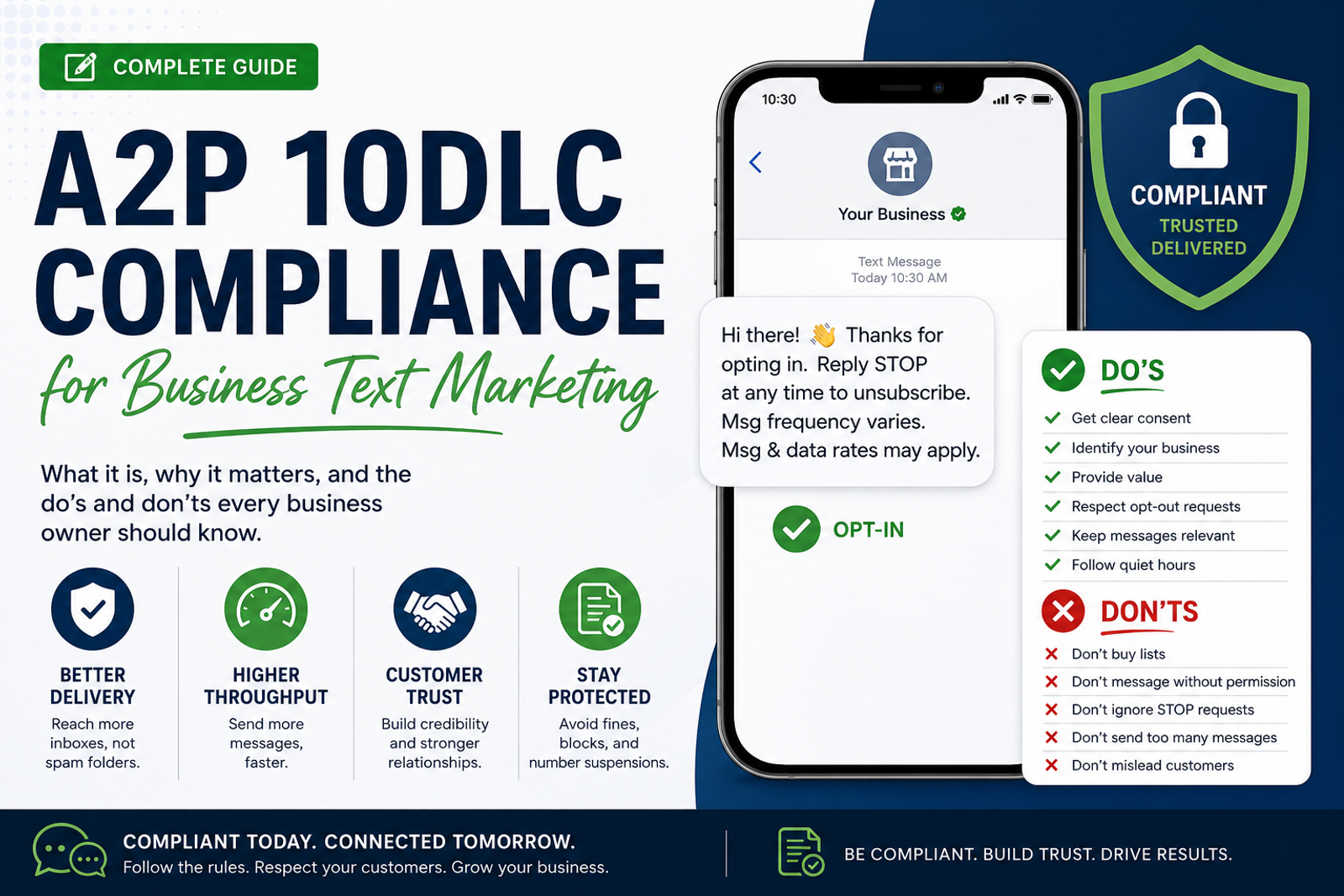
Customers must provide clear consent before receiving promotional text messages.
Common ways to obtain consent include:
- Website forms
- Online checkout
- Appointment scheduling
- Keyword opt-ins
- Paper forms
- Digital waivers
- Event registrations
The customer should understand:
- They are agreeing to receive text messages
- Message frequency
- Possible carrier messaging rates
- How to opt out
Transparency is critical.
Always Include an Easy Way to Opt Out
Every business must make it simple for customers to stop receiving messages.
Most businesses include language such as:
Reply STOP to unsubscribe.
Customers should also be able to receive confirmation that they have been removed.
Ignoring opt-out requests can create compliance issues and damage your reputation.
The Do's of SMS Marketing
Following best practices helps improve customer engagement while keeping your business compliant.
Do Get Written Consent
Always collect documented permission before sending marketing texts.
Keep records whenever possible.
Do Identify Your Business
Customers should immediately know who the message is from.
Instead of:
Huge Sale Today!
Use:
ABC Dental: Save 20% on whitening this week.
Do Provide Value
Every message should have a purpose.
Examples include:
- Limited-time offers
- Appointment reminders
- Event updates
- Loyalty rewards
- Service notifications
- Helpful seasonal tips
Avoid texting simply because you haven't contacted customers recently.
Do Keep Messages Short
Most successful marketing texts are concise and easy to read. Aim for one clear message and one call to action.
Do Respect Your Customers' Time
Send messages during reasonable business hours. Late-night marketing texts often lead to opt-outs.
Do Segment Your Audience
Not every customer should receive every promotion. Send relevant offers based on customer interests whenever possible.
Do Protect Customer Information
Use reputable messaging platforms that prioritize security and comply with applicable privacy laws.
The Don'ts of SMS Marketing
Avoid these common mistakes.
Don't Buy Text Message Lists
Purchased phone lists almost always violate carrier guidelines and frequently generate spam complaints. Build your own permission-based audience.
Don't Send Messages Without Permission
Even existing customers should provide consent for promotional texts.
Transactional messages and marketing messages have different requirements.
Don't Ignore STOP Requests
When someone opts out, remove them immediately.
Never continue sending promotional texts.
Don't Mislead Customers
Avoid deceptive language or false urgency.
Be honest about pricing, promotions, and offers.
Don't Send Too Many Messages
Bombarding customers with daily promotions often results in unsubscribes.
Quality is more important than quantity.
Don't Use URL Shorteners Excessively
Some shortened links can appear suspicious to carriers and recipients.
Whenever possible, use branded or recognizable links.
Don't Share Customer Information
Never sell or share customer phone numbers without proper authorization.
Respecting customer privacy builds long-term trust.
Common Industries That Need A2P Compliance
Almost every industry using business texting should understand A2P requirements, including:
- Medical practices
- Dental offices
- Chiropractors
- Real estate agents
- Mortgage companies
- Restaurants
- Auto repair shops
- HVAC contractors
- Roofers
- Plumbers
- Electricians
- Fitness centers
- Salons
- Vacation rentals
- Property managers
- Event venues
- Fishing charters
- Boat rentals
- Hotels
- Law firms
- Insurance agencies
- Retail stores
If your business sends messages through software, there's a good chance A2P compliance applies.
Frequently Asked Questions About A2P Compliance
Is A2P required for small businesses?
Yes. Businesses of all sizes that use application-to-person messaging should determine whether registration is required for their messaging use case.
Can I use my personal cell phone?
Using a personal phone for one-to-one conversations is different from using business messaging software. If you're sending messages through an SMS platform, CRM, or automation tool, A2P registration is commonly required.
What happens if I don't register?
Your messages may be filtered, blocked, delayed, or your number could face restrictions. Carrier enforcement policies continue to evolve.
Is A2P registration a one-time process?
Registration is generally completed once for a messaging campaign, but businesses should update their registration if their messaging practices change significantly.
Why Compliance Is Also Good Marketing
Many business owners view A2P compliance as just another regulation.
In reality, it's part of building a better customer experience.
When customers trust your messages, they're more likely to:
- Open them
- Read them
- Click your links
- Schedule appointments
- Make purchases
- Stay subscribed
Following best practices doesn't just help you avoid carrier issues; it helps you build stronger relationships with your customers.
As text messaging continues to grow, businesses that prioritize permission-based communication and transparency will be better positioned for long-term success. Taking the time to become A2P compliant, collect proper consent, and follow SMS marketing best practices protects your business while ensuring your messages reach the people who actually want to hear from you.