Business Growth Strategy Captevrix: Digital Marketing, Custom
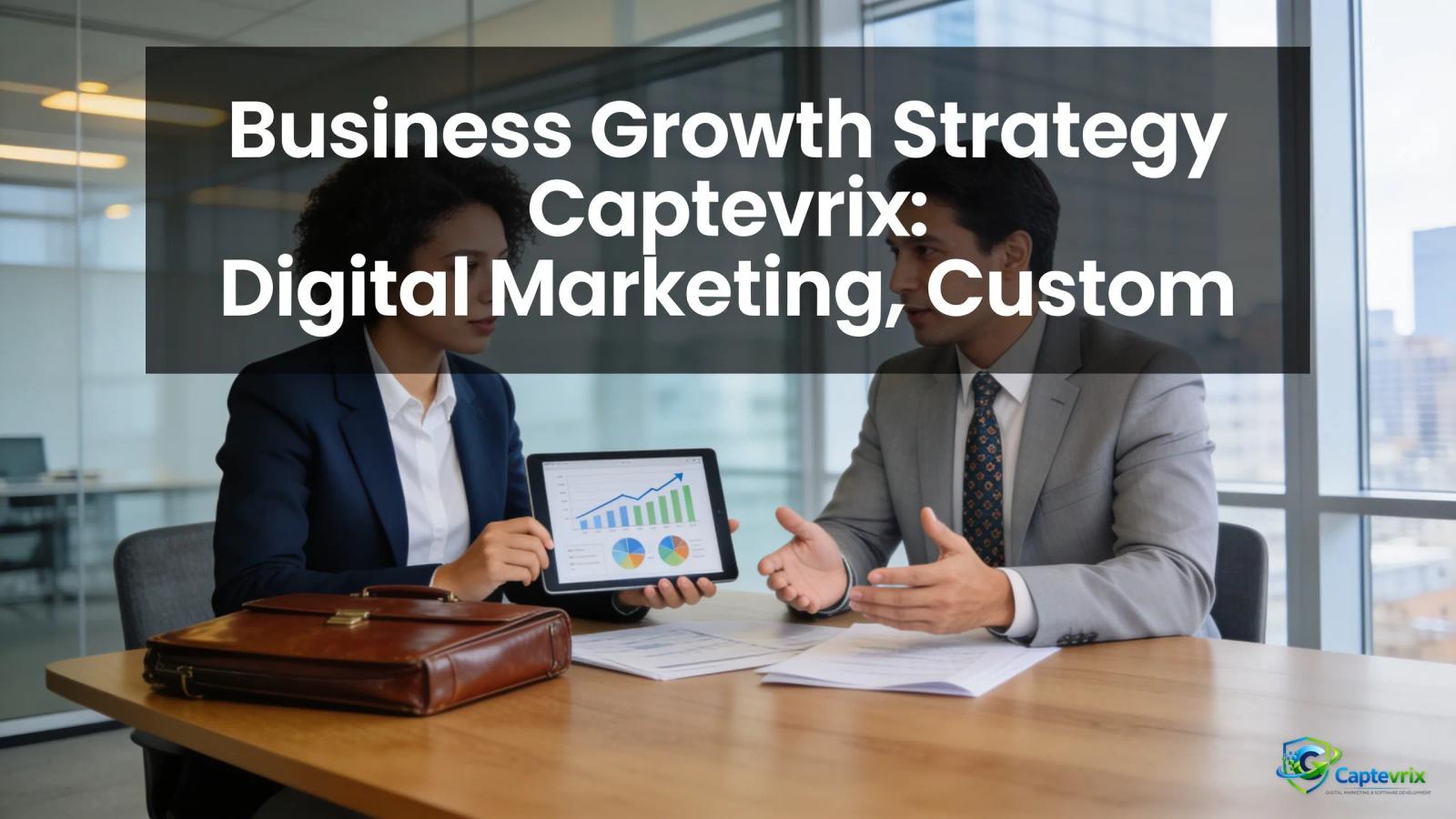
Business Growth Strategy: Roadmap to Success
A business growth strategy planning guide is a structured roadmap that translates ambitious goals into measurable milestones, enabling organizations to scale without overextending resources or losing control of the operational demands that accompany expansion. Captevrix, based in Fort Walton Beach, FL, helps businesses of every size build the clearly defined strategies that align resources, target new markets, and drive long-term profitability.
Business growth strategy planning converts ambition into measurable action. A structured growth plan defines target markets, aligns teams, and sequences expansion steps, whether a business is entering new markets, scaling operations, or pursuing mergers. Without that roadmap, resources stretch thin and critical operational requirements get missed. Captevrix helps clients build and execute the strategies that turn profitable, sustainable growth into a measurable outcome- not a hope.
Key Takeaways For Growth Roadmap
- A well-built growth plan converts ambition into actionable decisions that move businesses forward.
- Business growth plans address expansion through new locations, workforce increases, or market entry.
- Captevrix, a Fort Walton Beach growth strategy consulting firm, helps SMBs build the structured plans that drive sustainable growth.
- Successful growth strategies transform ambitious goals into achievable milestones with documented roadmaps.
What Do You Need Before Building a Growth Plan?
A business growth strategy starts with a clear strategic document, one that defines how an organization will expand over a specific period and maps the exact steps required to reach each goal. Skipping this foundation is costly. Businesses without a formal plan routinely overstretch resources, misalign their teams, and miss the operational requirements that quietly derail growth before it gains any momentum.
The gap between wanting growth and achieving it is real and well-documented. Research shows 79% of small businesses say they want to grow, yet only 41% actually do. That gap exists because intent without structure produces activity, not results.
Why Do So Many Small Businesses Fail to Grow?
The most common reason is a missing documented plan. Without one, teams chase competing priorities, budgets scatter across initiatives that were never strategically aligned, and no one can measure whether any of it is working.
What Prerequisites Should a Business Gather First?
Before building a roadmap, business owners should assemble three foundational inputs:
- Assess current performance: Gather revenue data, customer metrics, and operational benchmarks.
- Define growth goals: Set specific, time-bound targets for expansion.
- Audit available resources: Confirm budget, team capacity, and technology infrastructure.
Captevrix, a full-service digital marketing, software development, and growth strategy consulting firm in Fort Walton Beach, FL, helps small and mid-sized businesses complete exactly this groundwork before any growth roadmap for SMB development begins.

How Do You Build a Business Growth Roadmap Step by Step?
Building a business growth roadmap means converting ambition into a structured sequence of decisions and actions. A complete roadmap covers market research, opportunity identification, objective-setting, and timeline definition; each element reinforcing the next.
Vision alone does not produce growth. A well-built plan gives business leaders the concrete steps that actually move an organization forward. Without that structure, resources stretch thin, teams pull in different directions, and critical operational requirements get missed.
How to create a growth roadmap for SMB Ft Walton Beach clients, or any small to mid-sized business, follows a repeatable sequence:
- Conduct market research. Analyze the competitive landscape, customer demand, and market gaps before committing to any direction.
- Identify growth opportunities. Pinpoint the specific markets, services, or customer segments that offer the strongest potential for expansion.
- Define clear objectives. Translate each opportunity into a measurable goal with an explicit outcome, not a vague aspiration.
- Set timelines. Assign realistic deadlines to every objective so accountability is built into the plan from the start.
- Build a business development process. Establish a repeatable system to identify, nurture, and acquire new clients and business opportunities, the engine that drives ongoing profitability.
Why Is a Strong Business Development Strategy Non-Negotiable?
A strong business development strategy is what separates organizations that grow from those that stagnate. Reaching new clients and unlocking new revenue streams takes a deliberate plan; reactive effort rarely gets the job done.
How Does Captevrix Support This Process?
Captevrix's business growth strategy work combines strategic consulting with hands-on execution. The growth strategy consulting that Fort Walton Beach businesses receive through Captevrix turns each roadmap step into measurable action, closing the gap between planning and real results.

What Common Mistakes Derail a Growth Strategy?
Most growth strategies fail because businesses treat expansion as a destination rather than a structured process. Markets shift, technologies evolve, and competitive expectations change; organizations that approach growth without a clear framework lose ground to rivals who have one.
The most damaging mistakes share a common thread: no reliable roadmap. Without a documented plan to guide decisions, teams overstretch resources, misalign priorities, and miss the critical operational requirements that quietly derail momentum before it builds.
Why Does an Unstructured Approach Cause So Much Damage?
An unstructured approach makes businesses reactive rather than deliberate. When competitive conditions shift, and they will, organizations without a growth framework have no basis for their decisions, and costly missteps follow.
How Does a Custom Strategy Prevent These Pitfalls?
Generic, off-the-shelf strategies rarely fit the specific goals of a small or mid-sized business. Captevrix partners with clients to build custom strategies around their actual goals, solving problems that span marketing, software, and operations, so every business growth strategy Captevrix delivers is built for that client's reality, not copied from a template.
Common mistakes to avoid:
- Skipping market analysis before setting growth targets
- Treating the plan as static rather than adaptive
- Misaligning team priorities with stated strategic goals
- Overlooking technology as a driver of competitive advantage
Businesses that work with growth strategy consulting specialists, and those focused on learning how to create a growth roadmap for SMB clients, consistently avoid these traps by anchoring every decision to a documented, measurable plan.
Frequently Asked Questions
What is a business growth strategy and why does every SMB need one?
A business growth strategy is a structured, documented plan that defines how an organization will expand over a specific period, covering target markets, resource allocation, and the sequential steps required to reach each goal. Every small and mid-sized business needs one because intent without structure produces activity, not results. Research cited in the article shows that while 79% of small businesses want to grow, only 41% actually do. A formal strategy closes that gap by aligning teams, sequencing priorities, and establishing clear measures of progress so resources are never overstretched.
What are the main types of business growth strategies available to small businesses?
Business growth strategy types for small businesses generally fall into several categories: entering new geographic markets, expanding the range of products or services offered, growing the existing customer base within a current market, increasing workforce capacity to support greater operational output, and pursuing strategic mergers or acquisitions. Each approach requires a different resource commitment and carries different risk profiles. The right type depends on a business's current performance benchmarks, available budget, team capacity, and the specific opportunities identified during market research, all foundational inputs that Captevrix helps clients assess before any roadmap is built.
How does strategic planning directly support long-term business growth?
Strategic planning for business growth works by converting high-level ambition into a concrete, time-bound roadmap that every team member can act on. It forces business leaders to define specific, measurable growth goals rather than vague aspirations, audit the resources available to pursue them, and sequence each expansion step in a logical order. This structure prevents the most common growth killers: misaligned team priorities, overstretched budgets, and missed operational requirements. When businesses treat planning as an ongoing process rather than a one-time exercise, they stay adaptive as market conditions and competitive expectations shift.
What role does market research play in a business growth roadmap?
Market research is the critical first step in building a business growth roadmap because it grounds every subsequent decision in reality rather than assumption. Before committing to any direction, businesses must analyze the competitive landscape, assess customer demand, and identify genuine market gaps. Skipping this step is one of the most damaging mistakes an organization can make; it leads to growth targets that are misaligned with actual market opportunity and strategies that fail before they gain momentum. A market expansion strategy built on rigorous research gives businesses a defensible foundation and a clearer path to sustainable, profitable growth.
How does a revenue scaling strategy differ from general business growth planning?
A revenue scaling strategy is a specific component within broader business growth planning; it focuses exclusively on systematically increasing revenue without a proportional increase in costs or operational complexity. General business growth planning covers the full spectrum of expansion decisions, including workforce, market entry, technology, and process development. Revenue scaling drills down into the business development process: the repeatable systems for identifying, nurturing, and acquiring new clients and unlocking new revenue streams. Both are necessary; the growth plan sets direction, while the revenue scaling strategy ensures the financial engine driving that growth is efficient, deliberate, and measurable.
What should a business growth framework include to be effective?
An effective growth strategy framework must include five interconnected elements: a rigorous market research phase, a clearly defined set of growth opportunities ranked by potential, specific and measurable objectives tied to each opportunity, realistic timelines that build accountability into the plan from the start, and a documented business development process that provides a repeatable system for acquiring new clients and revenue. Frameworks that omit any of these elements leave organizations exposed to reactive decision-making when market conditions shift. The most effective frameworks are also treated as living documents; reviewed and updated as performance data and competitive dynamics evolve.
How can a business write a business growth plan that is realistic and actionable?
To write a business growth plan that is genuinely actionable, business owners should begin by gathering three foundational inputs: current performance data (revenue, customer metrics, and operational benchmarks), specific time-bound growth targets, and an honest audit of available budget, team capacity, and technology infrastructure. From that foundation, the plan documents a sequenced roadmap, moving from market research through opportunity identification, objective-setting, and timeline assignment to the establishment of a repeatable business development process. Keeping each milestone specific and measurable, rather than aspirational, is what separates a plan that drives results from one that sits unused.
Start Constructing Your Business Growth Strategy
A structured business growth strategy turns ambitious goals into measurable, sequential milestones; from market research and opportunity identification through objective-setting and a repeatable business development process that drives sustainable revenue scaling. The strongest growth plans are built on three foundational inputs: current performance data, specific time-bound targets, and an honest audit of available resources. Businesses that treat strategic planning as an ongoing process, not a one-time exercise, stay adaptive as markets shift, sidestep the misalignment and resource overreach that derail most SMB expansion efforts, and earn a real competitive edge over time. When the goal is to move from intent to structured execution, Captevrix's growth strategy consulting team in Fort Walton Beach builds the custom roadmap to get there.